


WHATEVER IT IS YOU NEED ANSWERS FOR
Pool Heating FAQs: Everything Customers Ask Us, Answered
The most common questions Beasley Pool Heating customers ask, answered in one comprehensive reference. Covers cost, sizing, choosing a system, installation, operation, service, repairs, warranties, end-of-life decisions, and more.
Drawn from 45+ years of installing and servicing pool heating systems across South Australia. If you can’t find your question here, phone (08) 8349 4333. We’re a family business, not a call centre, and we like answering questions.
WHAT TO EXPECT
Pool Heating Installation FAQs
From installation timeframes and roof access to electrical work, approvals and new pool planning, here’s what to expect before, during and after your pool heating installation.
How long does solar installation take?
Most metro Adelaide residential solar installations are completed in a single day by our team.

Will installation disrupt my pool?
Minimal disruption. Most installs proceed without any impact to the pool. The filtration system is only turned off for the duration of the install, which causes no issues to your pool.
How long does heat pump installation take?
Typically half a day for metro residential, depending on whether new electrical work is required.
Do I need council permission to install?
For standard residential solar or heat pump installations, typically no. We’ll let you know if your specific install requires any permits or approvals during the quote.
Will installation damage my roof?
No. We use appropriate fixings for your roof type (tile, Colorbond, metal deck) and assess structural condition during the quote.
Building a new pool? When should I think about heating?
Talk to us early. Coordinating heating with the pool build (timing, plumbing connections, controller placement) is easier than retrofitting later.
UNDERSTANDING THE COSTS
Pool Heating Costs, Pricing & Running Expense FAQs
Get clear answers on pool heating prices in Adelaide, installation costs, ongoing running expenses and the factors that can affect what you’ll pay for solar or heat pump systems.

How much does pool heating cost in Adelaide?

What does solar pool heating cost?
What does a pool heat pump cost?

How much do DIY solar kits cost?
What does a heat pump cost to run?

What does solar cost to run?
Are there rebates or incentives for pool heating?
There isn’t currently a blanket South Australian rebate specifically for every residential pool heating installation. However, energy-efficiency incentives, retailer programs and related rebates can change, and some assistance may apply to associated equipment such as efficient pool pumps or broader home energy upgrades.
For the most up-to-date options, check the Australian Government’s Rebates and Assistance Finder, which lets you filter available programs by location and eligibility
GETTING THE SIZE RIGHT
How We Size Your Pool Heating System
The right system size depends on more than just the size of your pool. Pool volume, roof area and orientation, local conditions, target temperature and how long you want to swim each year all influence what will actually perform well.
Getting those calculations right from the start means better heating performance, more predictable running costs and a system that isn’t constantly working harder than it should.
How much solar pool heating do I need?
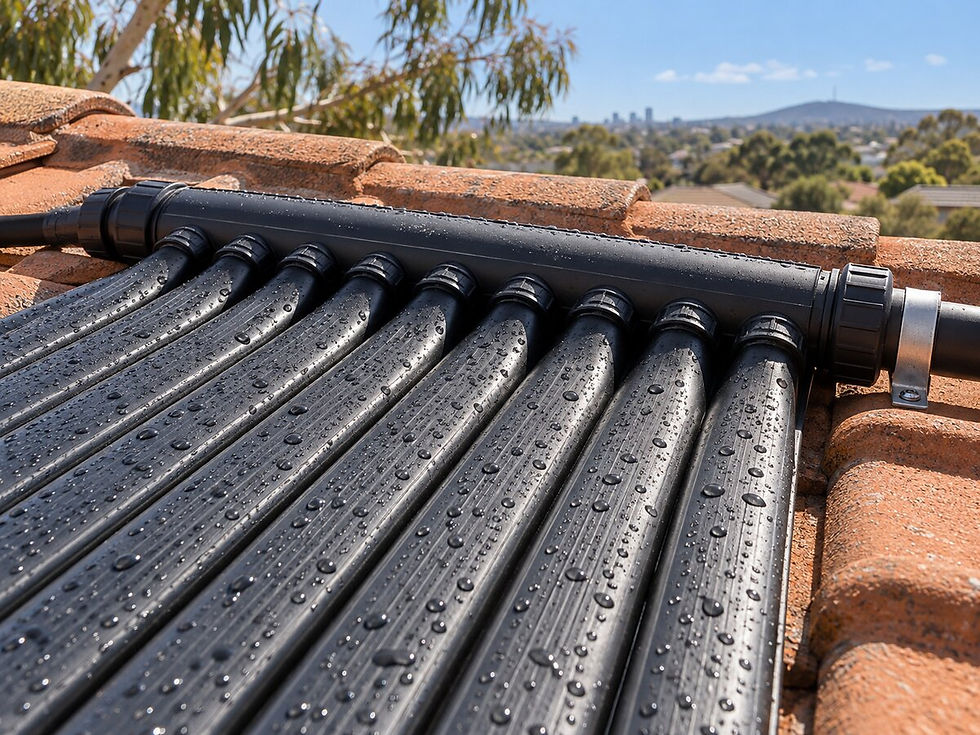
As a rule, collector area roughly equal to your pool’s surface area. Use the Solar Sizing Calculator or call us for sizing help.
What size pool heat pump do I need?
Sized to your pool volume and target temperature. Most family pools (40 to 60kL) suit 13 to 17kW. Use the Heat Pump Sizing Calculator or call us.
Does roof orientation affect solar heating?
Solar works great for north, east and west facing roofs. South-facing roofs need around 20 to 30% more collector area to compensate for reduced sun exposure.
How much roof space does solar pool heating require?
Roughly equal to your pool’s surface area, ideally north-facing. We assess the specific roof during the free quote.
Can I save money by choosing a smaller system?
Underspecified systems deliver underspecified results: less heat, shorter swim season extension. We always quote what’ll genuinely work for your goals.

FIND THE RIGHT FIT
Which Pool Heating System Is Right for You?
The best pool heating system depends on how you use your pool, your available roof space, budget and how far you want to extend the swimming season. These comparisons make it easier to understand the differences before you choose.
Solar Pool Heating or Heat Pump?
Solar is usually the lowest-cost option to run when you have suitable, unshaded roof space. A heat pump gives you more control over water temperature and is a strong choice where roof space is limited or a longer swimming season is the priority.

Can Solar and a Heat Pump Work Together?
Yes. A combined system can use solar for economical heating whenever conditions allow, with the heat pump providing extra temperature control during cooler weather and the shoulder seasons.

DIY Kit or Professional Installation?
DIY solar kits can suit confident homeowners with the right roof access and practical skills. Professional installation is the better choice for more complex roofs, integrated plumbing, larger systems or anyone who simply wants the whole job handled properly.

Zane Gulfstream or Gulfpanel?
Zane Gulfstream is a flexible solar collector suited to many standard residential installations. Zane Gulfpanel uses rigid collectors and can be a better fit where durability, higher output or limited roof area are important considerations.

Guardian Eco-Pro or Guardian Lux V?
Guardian Eco-Pro offers strong inverter performance and excellent value for most residential pools. Guardian Lux V is the premium option, adding ultra-quiet operation, cold-climate capability and configurations suited to more demanding or space-conscious installations.
SERVICE & WARRANTIES
Service, Repairs & Warranty FAQs
Call (08) 8349 4333. Metro service typically within 48 to 72 hours. We service every system we install plus support you with most major brands.
Heat pumps: annual service recommended. Solar: annual check up is recommended, but there are minimal moving parts and it will run trouble-free for a decade with no formal service.
Yes, Zane and Guardian spares are stocked at our Beverley warehouse. Most repairs to systems we install are resolved in a single visit.
For Zane and Guardian systems we’ve installed, we process warranty claims directly with the manufacturer. You don’t deal with the manufacturer, we do. Both Zane and Guardian carry industry-leading manufacturer warranties, with specific terms confirmed during quote, and Beasley installation workmanship is also backed directly.
Manufacturing defects covered. Wear-and-tear items (e.g. sensors, perished plumbing in older systems) typically not. Damage from external causes (hail, vandalism, water chemistry) typically not. We’ll confirm coverage before any chargeable work.


REPAIR, REPLACE OR UPGRADE
Pool Heating Replacement & End-of-Life FAQs
Not sure whether your existing system still has life left in it? These answers cover expected lifespan, repair versus replacement, old equipment removal and what to consider when upgrading an ageing pool heating system.

How long should a pool heating system last?
Zane Solar and Guardian Heat Pumps

When is it better to replace than repair?
Honest Advice Both Ways
What happens to my old pool heating system?
Disposal Included

DAY-TO-DAY USE
Living With Your Pool Heating System FAQs
Once your system is set up, day-to-day operation is generally very simple. These are the things most pool owners want to know about running, covering and maintaining a heated pool.
Do I need to adjust my pool heating every day?
Usually, no. Modern Guardian heat pumps and Zane solar pool heating systems are designed to operate automatically around your chosen settings and available conditions.
Once everything is commissioned correctly, most owners simply set their preferred temperature or seasonal schedule and let the system do the work. You may make occasional adjustments as the weather or swimming season changes, but daily intervention shouldn’t be necessary.
Is a pool cover still worth using with heating?
Absolutely. A good thermal pool cover is one of the simplest ways to reduce heat loss, particularly overnight and during cooler or windy conditions.
By keeping more of the heat you’ve already generated in the water, a cover can help your heating system run more efficiently, shorten recovery times and reduce overall energy use.
Does heating change how I maintain my pool water?
Pool heating doesn’t replace or fundamentally change normal water care, but warmer water can increase evaporation and may affect how quickly sanitiser is used.
Regular testing, balanced chemistry and normal filtration maintenance are still important. If your pool is being kept warmer or used more frequently, you may simply find that your usual maintenance routine needs a little more attention.

KEEP EXPLORING
Related Pages You Might Find Useful
Deeper detail on everything covered above.


EXPLORE THE BLOG


